Poetry
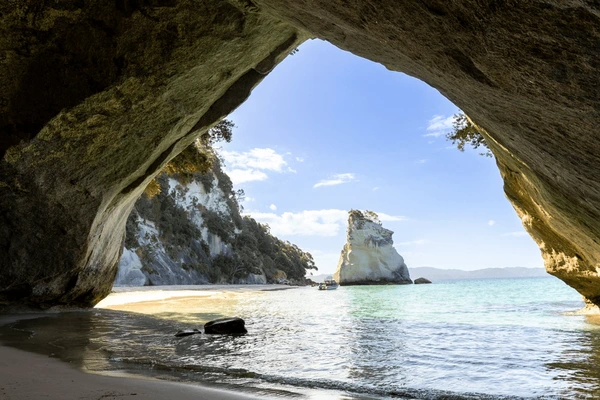
This poem explores the failed efforts of love through the recurring imagery of the sea and the shore. The beach, steady and enduring, represents stability, while the waves reflect ever-shifting currents and uncertainty. Through this metaphor, the poem conveys imbalance, longing, and the emotional erosion of romance, illustrating how love can wear away at resilience over time.
Where the Sea Fails to Meet the Shore
I’d like to write a love song titled,
‘Where the Sea Meets the Shore’ ,
Where the ocean reflects the endless sky,
A gaze I can’t help but adore.
Each wave brings treasures lost and found,
Colorful shells in tow,
The restless surf reshapes the land,
And shifts the earth below.
My eyes, like the beach’s gold and brown,
Stay fixed on the water’s glide,
As the tide draws in, the sand turns dark,
A longing it cannot hide.
Yet where the water fails to touch,
The ground is left bereft,
A lonely shore, a silent plea,
For waves that never swept.
I picture myself in a quiet cove,
A guitar in hand, I play,
Humming a tune to the ocean’s rhythm,
While the sun slips into gray.
But there I stand, without their light,
No harmony to sing,
Just the endless waves, the empty shore,
And the echoes my song may bring.

I wrote this poem as a Christmas gift for my parents, reflecting on our shared adventures and family traditions. Through imagery of our Christmas tree, decorated each year with cartoon village figurines, I capture the joy and magic of the season. By the fourth stanza, however, the tree comes down, symbolizing the end of childhood rituals and the reality of growing up, when time for those adventures becomes harder to find. Still, the poem ends on a hopeful note: a reminder that Christmas will come again, and that no matter how life changes, I can always count on the love and presence of my family.
A Village in a Christmas Tree
By: Everest Tomasello
My family puts up a tree,
Year after year.
Filled with cartoon figures,
Ever so endear.
On the top shelf, I see,
Chloe’s skate repair.
Which can only remind me,
Of the skiing adventures we share.
Next to the miniature store,
A campfire there burns.
Reminding me even more,
Of our joy, camping concerns.
After the Christmas season,
These toys are laid to rest.
Their lights go out,
Their dreams go dark,
A somber end, I confess.
But Christmas will come again,
My family will be there.
We’ll put up the tree,
Put on the tea,
And cherish the love we declare.
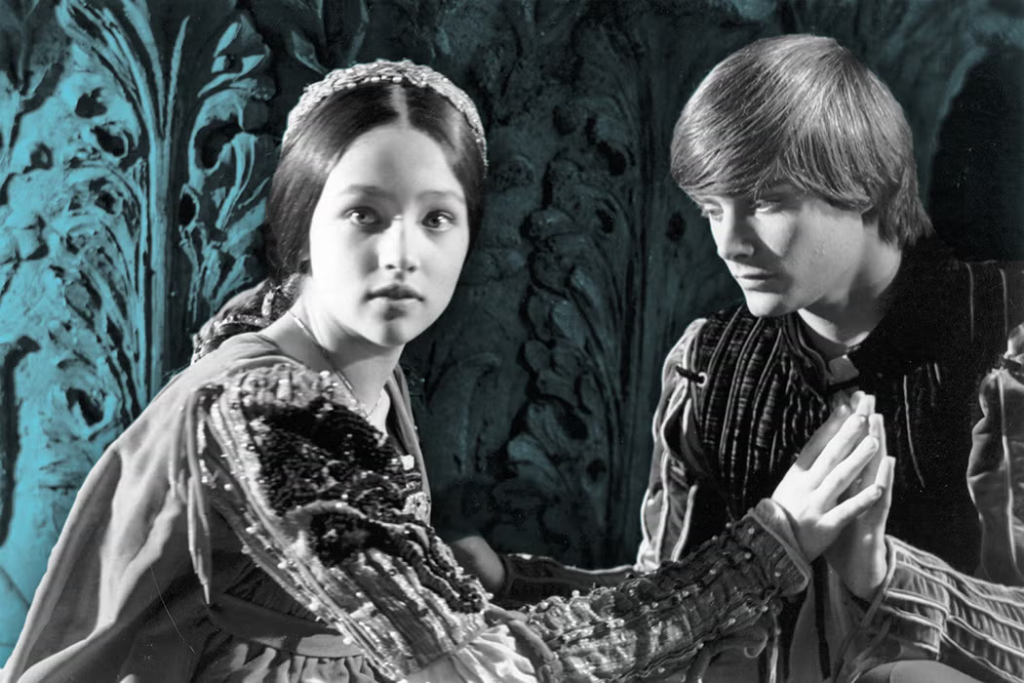
I wrote this sonnet to introduce and conclude a project on Romeo and Juliet. I adapted the style to mirror Shakespeare’s language and structure, drawing on elements of Early Modern English. While challenging, the process was incredibly rewarding — it pushed me to think more deeply about rhythm, word choice, and the emotional nuance in his work. This piece is meaningful to me because it marks the beginning of a passionate and evolving journey with Shakespeare, one that has since grown to include reading, writing, performing and directing his plays. It represents a turning point in both my creative growth and my appreciation for classical literature.
R&J Sonnet
Coequal though, Juliet and Romeo,
Though foes descended, love anon prevails.
Thy house’s rivalry doth loud bewail;
With esteemèd Montagues and Capulets,
Did fill with scorn that verily reflects
The violence that is anon to beest,
Which shall undoubted leadeth forth to wrest
The lives of hapless Romeo and Juliet.
Until the day of their untimely deaths,
Did Montagues and Capulets respect
No peace, but quarrel till one droppeth dead.
This quarrel Mercutio hath spent,
At fault of Romeo’s discontent was bred.
On hot Verona’s streets it shall commence.
I raiseth from the grave, and so I plea,
Though I misgive a sorrow unto thee.
No matter lapse o’er coil, remain a foe;
Wherefore thy vengeance? I dost not yet know.